Quote a floor in ten minutes, standing on it
Most quotes are lost to the gap between the visit and the email. You measure on Tuesday, you write it up on Thursday, and by then somebody else has already handed them a number. This is how to close that gap to about ten minutes, without giving up accuracy to do it.
The example is a car showroom: a 40 by 30 floor with a 10 by 8 office in the corner that is not getting coated. The method is the same for a garage, a warehouse bay or a kitchen.
1. Start from the customer, not the paperwork
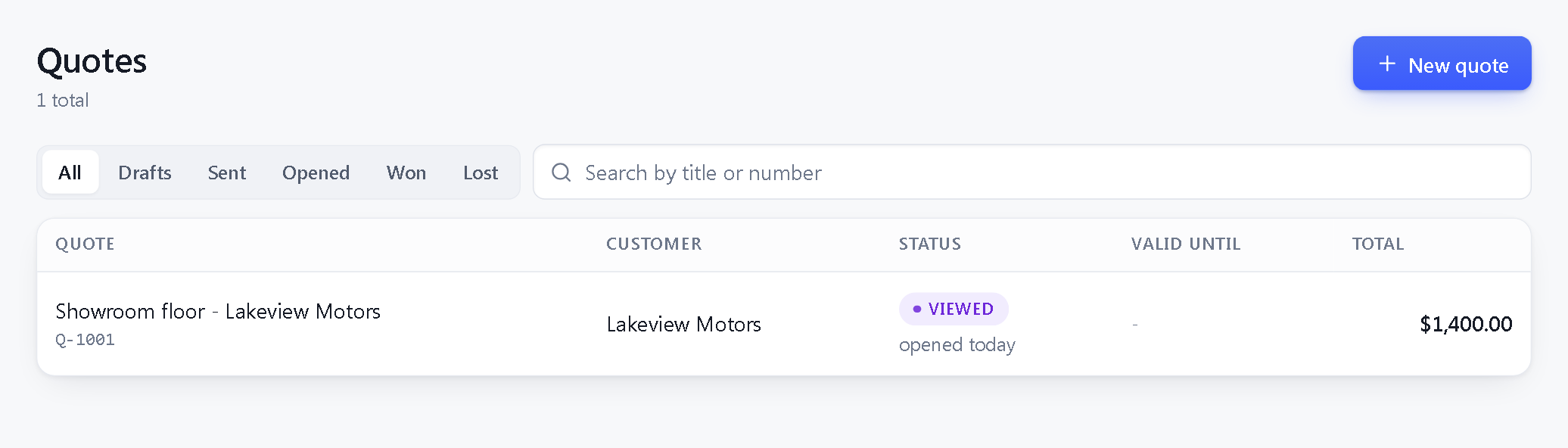
A quote is attached to a customer the moment it exists, which means the address, the phone number and the history are already on it when you get to the end. Pick an existing customer or type a new one in; you are not filling in a form, you are naming the job.
2. Draw the room, do not describe it
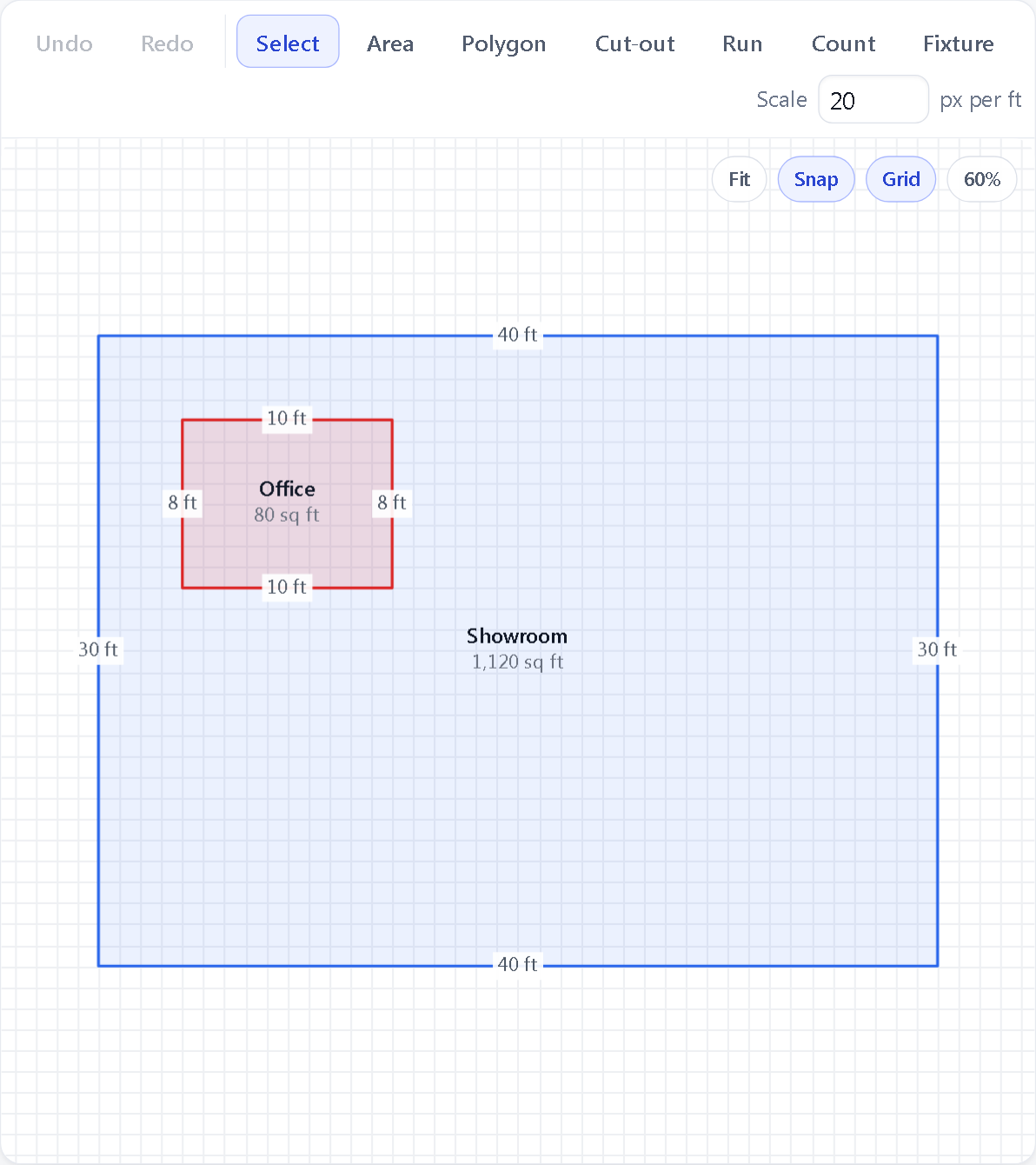
Two drags and the room exists. A third, with Cut-out selected, takes the office back out of it.
This is the part worth slowing down on, because it is where quotes go wrong: the number you charge on is net area. 40 x 30 is 1,200 square feet, the office is 80, and what you are coating is 1,120. Drawn, that subtraction happens by itself and it is visible to everybody afterwards. Typed into a calculator at the kerb, it is a number nobody can check later, including you.
Three things on that screen that matter more than they look:
- Every wall is labelled. 40, 30, 10, 8. If a label says something you did not expect, you
mis-tapped, and you find out now rather than when the material arrives.
- The cut-out is red and the room is blue. Deductions are a different kind of thing from
areas, and they are coloured like it.
- Undo is in the top-left corner. Drawing with a finger on glass means wrong lines. One tap
takes the last one back, and Ctrl+Z does the same on a laptop.
Type a length instead of dragging when you have the tape in your hand: start the wall, type 24 7 and press Enter for twenty-four foot seven. The direction comes from where your finger is, the length from what you typed.
3. Price it from your own book, not from a guess
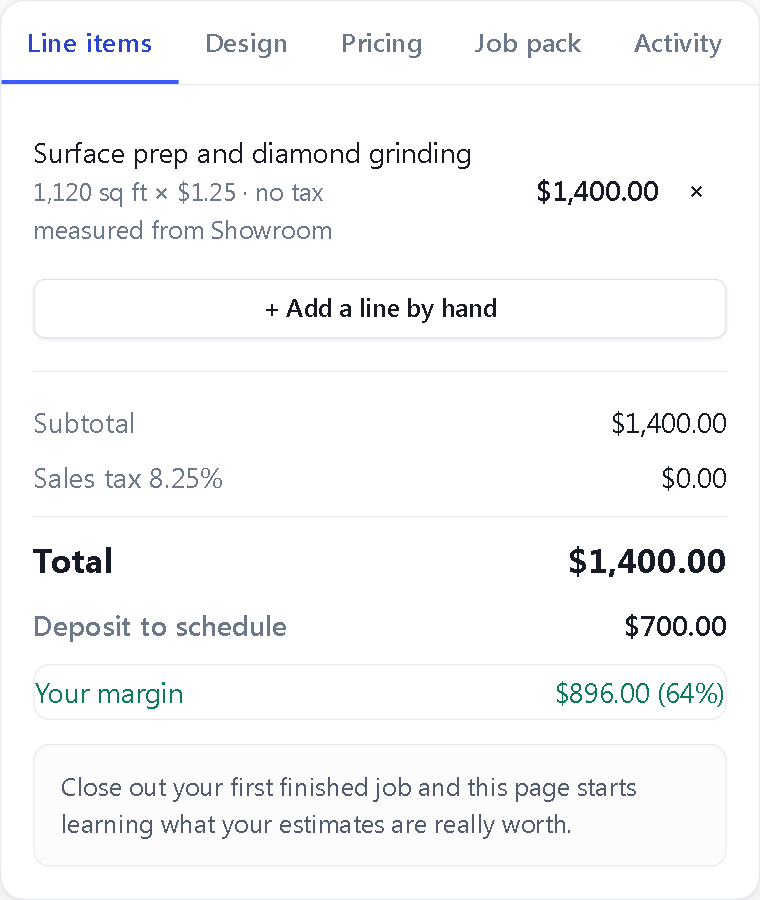
Tap the room, pick the line it should be charged on. The quantity is the measurement — you never type it — and the rate is whatever you charge, out of your own price list.
That separation is the whole point. You own the prices. The drawing owns the quantities. Nothing in the middle can quietly round a number in either direction.

Set the price book up once. The thing most people skip and then regret is the waste factor column: eight per cent on a coating and ten on a flake broadcast is a reasonable start, and it is applied per item rather than guessed at once at the end. Material wastes differently from labour, and a rough slab wastes differently from a smooth one.
The taxable column is the other one worth getting right. In most states labour on an improvement to real property is exempt while materials are not, so a single tax rate across the whole subtotal is either over-charging your customer or under-collecting for the state.
4. Send it before you leave the driveway
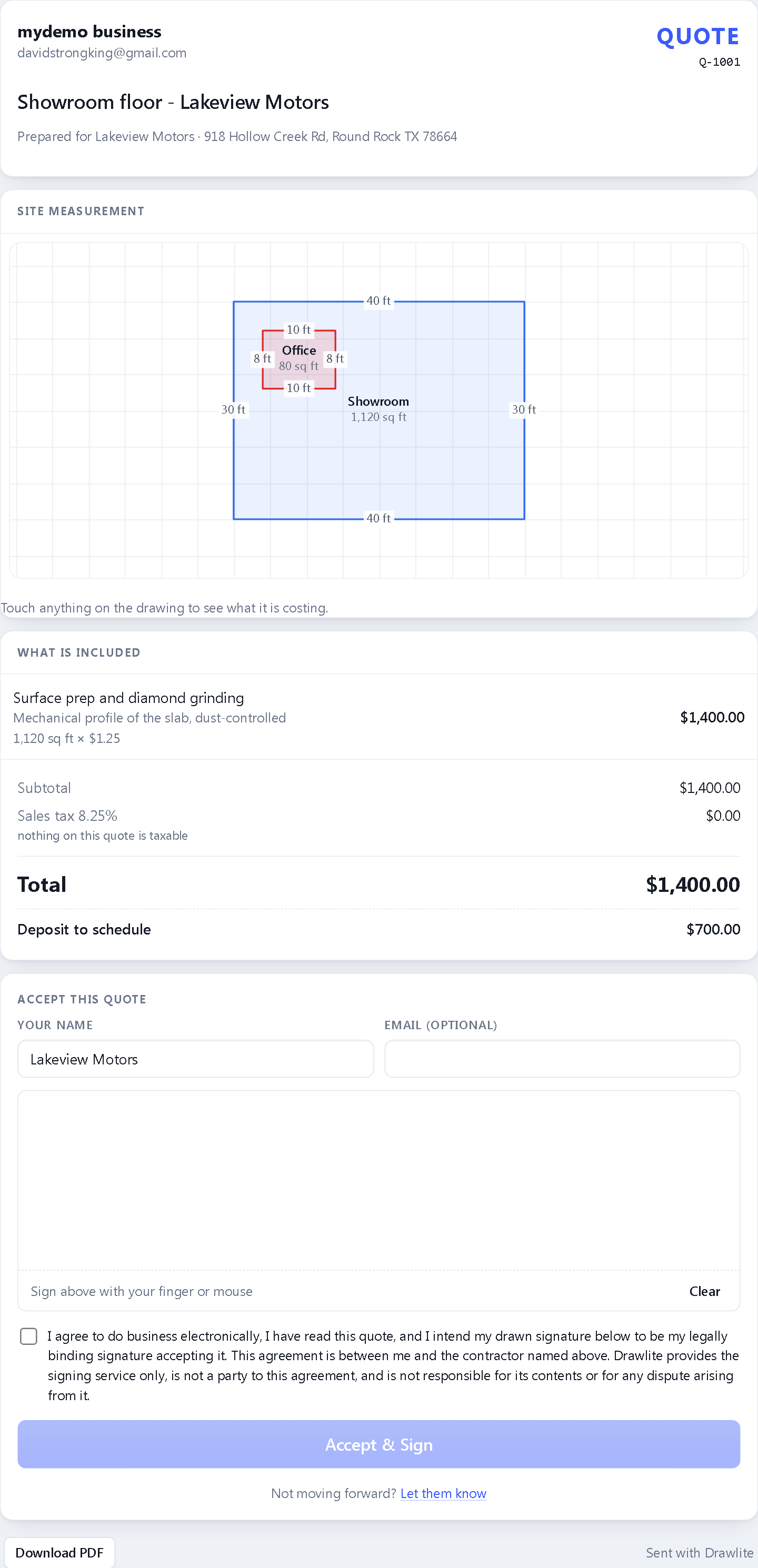
What they get is not a PDF attachment they have to find later. It is a link that opens on a phone: the drawing you just made, what is included, what it costs, and a box to sign in.
Two details that decide whether it gets signed:
- The drawing is on it. A number on its own invites haggling. A number with the room it was
measured from, with the office visibly taken out of it, invites a signature.
- They can sign on the spot. The quote is accepted with a finger, a timestamp and a copy of
the document as it stood at that moment. You do not have to be there, and you do not have to send a second email asking.
If they are not ready, that is fine — the link stays live, and you find out when they open it.
What this actually changes
Not the estimating. You already know how to price a floor. What changes is the number of evenings spent writing up what you already worked out at the job, and the number of jobs that go to whoever answered first.
Measure it in front of them. Price it in front of them. Leave with it signed.